Community Conservation
Through our community conservation strategic priority, ALT empowers communities in the City of Pittsburgh and first-ring suburbs through education, innovative programs, and resources to create equity through conservation.
Our goals are:
1. Most of our conservation activity will directly impact environmental justice and low-to-moderate income communities
2. Our conserved lands will produce fresh food that is accessible and affordable to the immediate community
3. Collaborate with partners to activate 10% of vacant lots in the City of Pittsburgh
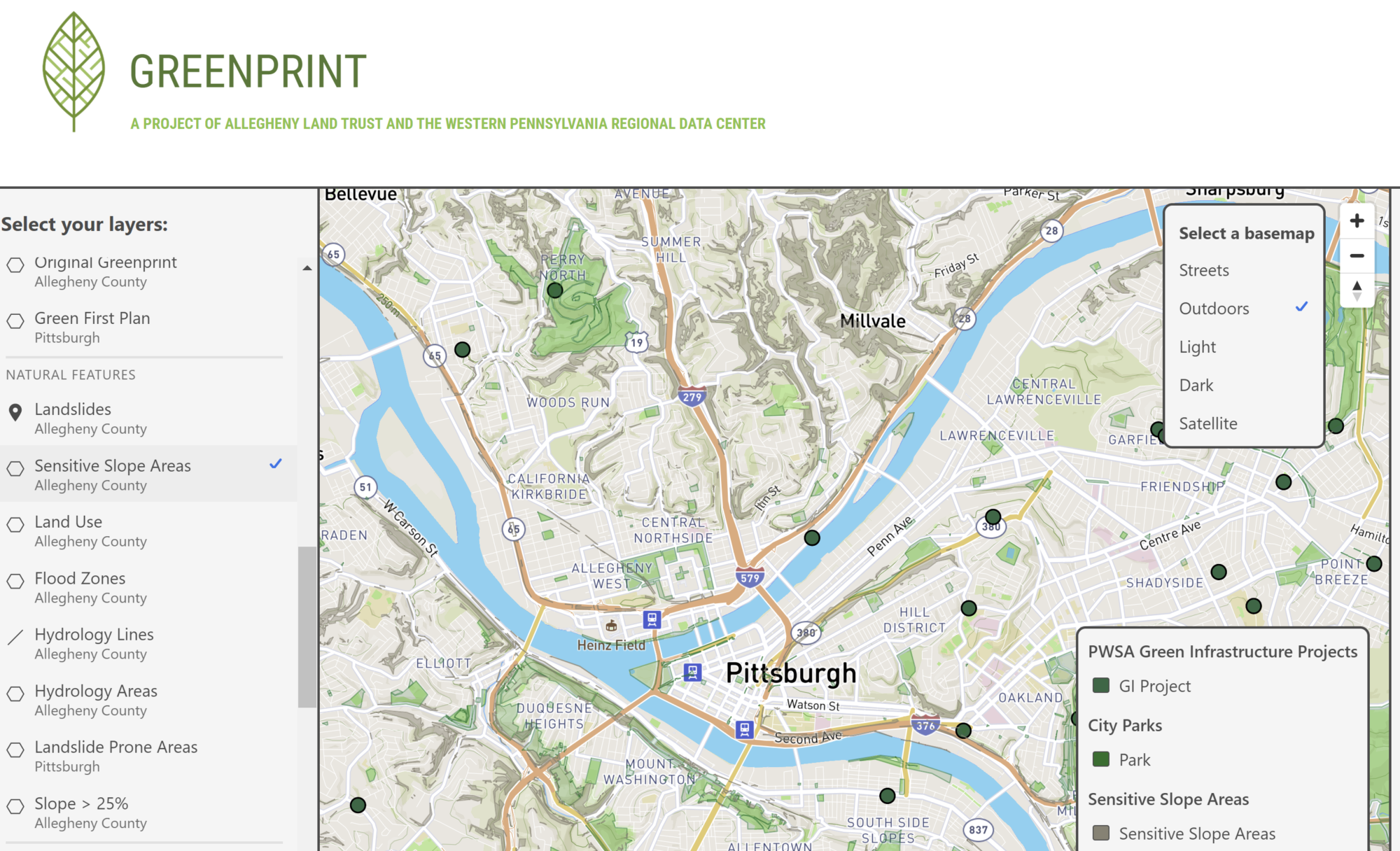
Greenprint Planning Tool | To better inform communities’ land use decisions and ownership considerations, ALT collaborated with the Western Pennsylvania Regional Data Center to develop an intersectional analysis of parcel status of the Greater Pittsburgh Region, with a focus on key regional initiatives. Community Conservation is a multi-benefit solution to many of the issues facing the region, such as landslides, water management and combined sewer overflows; which have arisen from inappropriate development and poor and aging infrastructure. This “Greenprint” will emphasize green spaces as solutions, recognizing that all forms of urban greening can positively contribute to the overall health and benefit of the area. The Greenprint will guide ALT, policy makers, and the community on the best uses of parcels to improve comprehensive regional planning and decision-making.
Three Rivers Agricultural Land Initiative (TRALI) | TRALI is a partnership between Allegheny Land Trust and Grow Pittsburgh that provides long-term security to local community gardens and urban farms. The sites are owned by Allegheny Land Trust while Grow Pittsburgh provides support to the gardeners. The initiative creates the stability necessary to foster a vibrant, sustainable urban agriculture movement in the Pittsburgh region by removing the threat of future sales of agricultural lands for other development purposes and creating opportunity to expand urban agriculture. Learn more by clicking the linked box below.
Urban Conservation | The traditional land trust model typically operates on large scales in suburban and rural areas; our community conservation strategic priority acknowledges our region’s dense. We aim to apply our land trust tool belt to urban opportunities and challenges. The same benefits that apply to large, untouched swaths of forested land can also apply to small tracts of green in a dense city neighborhood – relief from the urban heat island effect, increased wildlife habitat, improved stormwater absorption, and more. Learn more about our individual projects by clicking their linked boxes below.